The Ultimate Guide to Protective Hairstyles: Winter Care and Styling Tips for Afro Hair
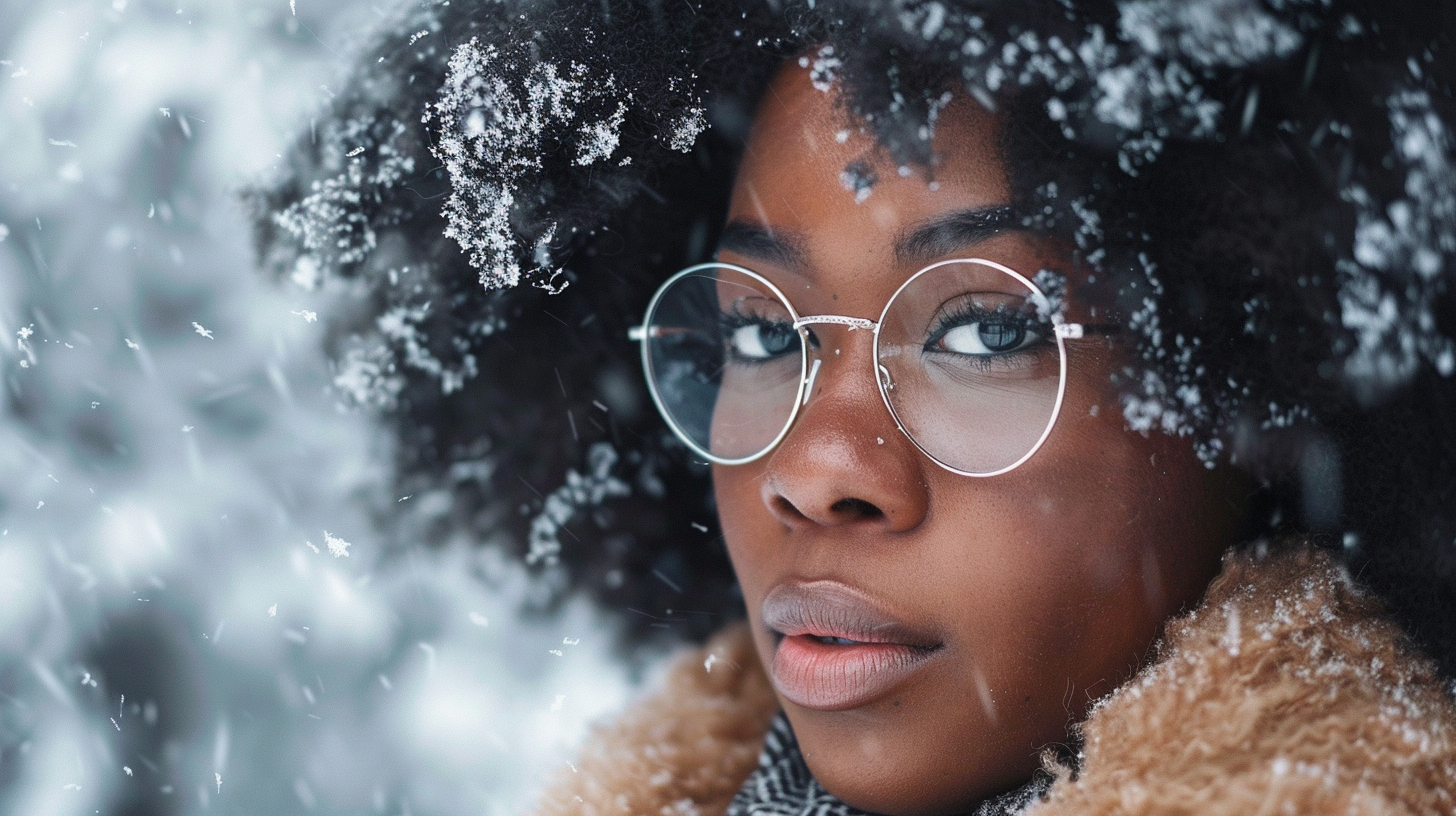
Caring for Afro hair in winter presents a particular challenge. Cold weather, dry indoor heating, and heavy rain can all put a strain on the hair, especially damaging the oldest and most delicate parts, the ends. Protective hairstyles, also known as "protective styles," offer a solution for effectively protecting the hair.
Moisture plays a crucial role in the health of Afro hair during the colder months. It's important to regularly moisturize the hair to prevent dryness and breakage. This can be achieved through weekly washing and, above all, conditioning with suitable products.
Whether you opt for imaginative twists, braids or cornrows, the right styling and care can help keep your Afro hair healthy and beautiful even in winter.
Meaning and benefits of protective hairstyles for Afro hair
Why protective hairstyles are important
Protective hairstyles, also known as "protective styles, " play a central role in the care of Afro hair. They not only serve as a fashion statement but also have a practical benefit – they protect the delicate hair ends from environmental factors such as cold and other external influences. The oldest parts of the hair are located at the ends and are therefore particularly prone to breakage. By braiding the ends into a protective hairstyle, they are concealed and thus protected from damage.
Especially in winter, Afro hair benefits from these styling techniques. Protective styles offer an effective shield against these adverse conditions.
Advantages of Protective Hairstyles
Besides their main purpose – protecting the hair – these hairstyles offer further advantages. For example, they allow you to protect the hair while simultaneously creating diverse looks, such as through imaginative twists or braids.
Another advantage: With a good hair care routine, protective styles can help retain moisture in the hair. This prevents dryness and associated breakage – a major benefit, especially during the colder months.
Protective hairstyles thus contribute significantly to the health and beauty of Afro hair, regardless of seasons and weather conditions. They are an effective method to protect the hair while simultaneously giving it an individual look.
Classic protective hairstyles at a glance
Protective hairstyles, in their variety and elegance, prove to be effective means of caring for and protecting Afro hair. Here are three of the most well-known classic protective hairstyles:
Cornrows: Elegance and Tradition

Cornrows represent a traditional hair styling technique that is both practical and aesthetically pleasing. They are created by braiding the hair tightly against the scalp. This method not only gives the hair a neat appearance but also protects it from environmental factors. Furthermore, cornrows offer the advantage of requiring less maintenance and being wearable for extended periods.
Twists: The natural twist-out alternative
Twists are another popular protective hairstyle for Afro hair. They are created by twisting two strands of hair around each other. This technique can be used with natural hair or hair reinforced with extensions. Twists are particularly known for their ability to retain moisture in the hair, thus preventing dryness. When these twists are undone, Afro hair can be worn frizz-free and with defined curls.
Box Braids: Versatility in Focus
Box braids offer both protection and styling versatility for Afro hair. They consist of individual braids created using hair extensions. Box braids allow for numerous styling options such as updos, braids, and ponytails. They are not only an elegant hairstyle option but also help protect Afro hair from environmental factors and promote its health.
Modern protective hairstyle trends
Innovation and creativity in the world of hairstyling have led to new protective hairstyles that are both stylish and functional. These modern trends are created by fashion experts and master hairdressers to enhance the Afro hairstyle while simultaneously caring for the hair.
Faux Locs: The dreadlocks look made easy
Faux locs offer the chance to experience the stunning dreadlock look without a long-term commitment. They create impressive texture and length, and are easy to install and remove. The tight mini-locks are pulled apart and brushed out with the fingers while upside down, creating a cool Afro-style look instead of sweet, ringlet curls. Finish with hairspray or a leave-in conditioner for longer-lasting hold. Additionally, a satin cap or durag is worn at night – this locks in moisture, maintains shine, and prevents the hair structure from becoming roughened by cotton coverings.
Weaveon: Versatility for every occasion
Weaveon is a type of hair extension where your own Afro hair is braided into cornrows. The extensions (wefts) are then sewn onto these braids – yes, with needle and thread! Although it's important to wear them for only a few weeks (around four) to avoid dryness and breakage, weaveon offers a variety of styles for every occasion. They can be woven into your Afro hair using a weaving technique performed by a hairstylist. There's also the trend of wrapping them in – a look called Passion Twists. Here, the stylist attaches the extensions to your Afro curls with small elastic bands and wraps them tightly around them.
These modern protective hairstyle trends not only offer a remarkable selection of styles to enhance your appearance, but also effective solutions for caring for Afro hair regardless of the season or weather conditions.
Care tips for protective hairstyles
Afro hair requires special care and attention. With the right care instructions, protective hairstyles can last longer and the hair underneath can remain healthy.
Proper cleaning and care for longevity
Care should be taken when cleaning Afro hair with protective hairstyles. A mild curl shampoo or a kids' curl shampoo is ideal, as it cleanses the hair without drying it out or ruining the style. A gentle scalp massage while washing can help promote blood circulation in the scalp and thus stimulate hair growth.
After shampooing, it is recommended to deep condition your hair with conditioner or Conditioner KIDS . A nutrient-rich conditioner not only conditions the hair and keeps it soft, but also strengthens its structure and reduces the likelihood of breakage.
It's important to avoid manipulating your hairstyle while it's drying. Using a microfiber towel or an old T-shirt for drying can help prevent friction and preserve your hair's shine.
Finally, applying a leave-in conditioner or leave-in conditioner for kids is extremely important to keep the moisture in the hair for days.

Moisturizing products and applications
To keep Afro hair moisturized with protective hairstyles, moisturizing products are essential, as mentioned. They provide the hair with necessary moisture and nutrients. Leave-in conditioners , hair oils, or special sprays are particularly suitable for this purpose.
It's also good practice to wear a satin headscarf or durag before going to bed. This helps retain moisture in the hair overnight and prevents the hair structure from becoming roughened by cotton covers. It not only helps maintain the hair's shine but also protects the hairstyle and keeps it intact for longer.
It's important to remember that Afro hair and protective hairstyles require regular care. With the right care strategy, you can ensure your hairstyles last and your hair stays healthy.
Instructions for styling protective hairstyles
The right technique and the use of suitable tools are crucial for creating attractive and long-lasting protective hairstyles. Proper hair preparation before styling is equally important.
Basic techniques and tools
To style Afro hair into a protective hairstyle, various techniques and tools are needed. First, a satin cap or durag can be worn while sleeping. This retains moisture in the hair overnight, prevents loss of shine, and protects the hair structure from roughening caused by cotton covers.
It's also important to pay attention to the type of hair tie used. The wrong ones can lead to hair breakage. A satin hair tie is a better choice.
Tight mini curls can be pulled up and brushed out with the fingers while upside down to create a cool Afro-style hair look instead of cute angel curls.
Step-by-step instructions for beginners
For those who prefer a more understated hairstyle that keeps the hair away from the face, we recommend sleek buns as a hairstyle - especially practical if you want to postpone wash day or if your hair simply doesn't cooperate anymore.
You'll need a brush or comb to smooth your hair into a tight braid. To make the curls lie close to your head, you can use a leave-in conditioner, hair oil, or gel – dampen your hair beforehand. This will give it extra conditioning and a beautiful, shiny finish.
Depending on where you want the braid to sit, you can vary its height. This hairstyle works well with either an elegant low bun or a high one. The contrast between sleek, close-lying hair and a voluminous pineapple style – meaning the hair isn't twisted into a bun but left loose and flowing – is also particularly beautiful.
Common mistakes and problems with protective hairstyles
When it comes to caring for Afro hair, protective hairstyles can play a crucial role. They not only help protect the hair and maintain its natural condition, but can also promote hair growth. However, there are some common mistakes and problems people might encounter. In this section, we will address these challenges.
Preventing hair damage under protective hairstyles
One of the biggest challenges in maintaining protective hairstyles is preventing hair damage. One of the main problems can be caused by styling the hair too tightly. If cornrows or twists are done very tightly, this can damage the hair follicles and even lead to hair loss.
To prevent such damage, experts therefore recommend a few precautions:
- Avoid extremely tight hairstyles: This could create unnecessary tension on the follicles.
- Use moisturizing products: These will help keep your Afro hair healthy and hydrated.
- Wear a satin cap or durag to sleep: The cap retains moisture in your Afro hair overnight and ensures that it doesn't lose its shine.
When to change or remove protective hairstyles
It is equally important to pay attention to when protective hairstyles should be changed or removed. One rule is particularly crucial here: if the hairstyle is painful or uncomfortable, it should be removed immediately. Furthermore, wearing a single protective hairstyle for an extended period can cause the hair to become matted and lead to hair damage.
Here are some indicators of when it might be time to change a protective hairstyle:
- Her hair begins to loosen or fall out of her hairstyle.
- They notice increased itching, scaling, sensitivity, and discomfort.
- The scalp becomes visible due to thinning hair.
By following these tips, you can ensure that your Afro hair stays healthy and retains its natural beauty.
Conclusion
Protective hairstyles are key to winter hair care for Afro hair. They offer not only style but also protection and care to maintain hair health. By following the tips and instructions presented in this article, beginners and advanced users alike can learn how to style cornrows, twists, faux locs, and other hairstyles. It's important to adhere to the recommendations to avoid hair damage and ensure proper hydration. Finally, knowing when to change or remove the hairstyle is essential for maintaining hair health. With the right knowledge and care, Afro hair can thrive during the cold season.